According to data from the US Census Bureau, the peak of the 2026 container shipping season on the trans-Pacific route – which is still underway – is not being driven by the boom in investment in artificial intelligence (AI), but rather by demand for traditional consumer goods and raw materials.
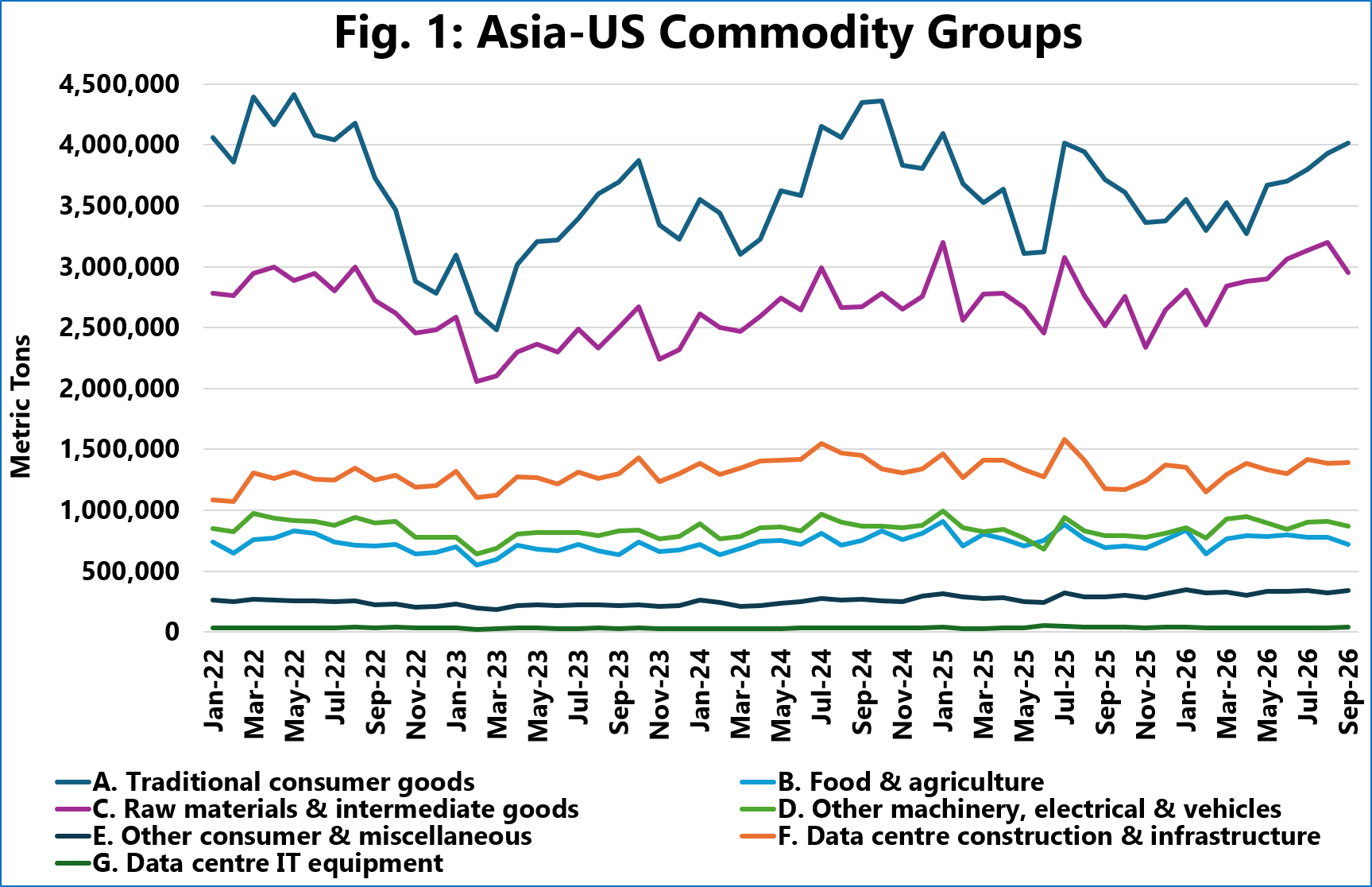
Looking at monthly containerized imports (expressed in metric tonnes) from Asia to the United States between January 2022 and September 2026, Sea Intelligence points out that chips and IT equipment intended for AI are not transported by sea, but almost exclusively by air.
The volume of materials and infrastructure intended for the construction of data centres has also remained virtually unchanged. “If the AI boom were truly driving up trans-Pacific container volumes, we would expect to see an increase here,” explains Alan Murphy, CEO of the consultancy firm.
As mentioned at the beginning of this article, the growth in transpacific freight volumes is being driven by traditional containerized goods and raw materials intended for industrial production.
There has been strong growth in imports of everyday consumer goods, such as clothing, toys, games, sports equipment and bicycles. At the same time, there have also been significant increases in imports of raw materials and intermediate goods, such as plastics, paper, packaging materials and commonly used hardware items.
Translation by Giles Foster