Strengthen cooperation between the city and its port, promoting a harmonious coexistence of port activities in their local regional areas. It was with this idea in mind that, back in 2015, the then president of Livorno Port Authority Giuliano Gallanti, inaugurated the opening of Italy’s second Port Center after Genoa’s. A high-tech mini-museum located in the heart of the Old Fortress. It’s a multimedia, high- tech laboratory that over the past decade has allowed students, citizens, and tourists to learn about Livorno’s port history, activities, and professions. Not just a simple multimedia exhibition of Livorno’s quays, complete with touch screens and sliding screens, but a training ground for life through which citizens can become increasingly familiar with what goes on in the port.
Ten years after its inauguration, the North Tyrrhenian PNA and the international association Villes et Ports have organized a celebratory event today in the ancient monument’s Ferretti Conference Hall. It’s not only to commemorate its anniversary, which was on November 3rd. It’s also to look back on the initiatives the Port Authority has carried out over the last few years to promote a harmonious relationship between the port and its surrounding urban fabric.
Initiatives linked to the Porto Aperto (Open Port) project, which has been promoting awareness of port areas and facilities for seventeen years; ‘Port Center Thursdays’ (a series of thematic talks covering everything from history to port culture in general); the specialist library launched in 2022 in the same building where the Port Center is located (la Sala del Capitano); the educational exhibition circuit, which includes historic boats at the former railway warehouse; the management of the Old Fortress, which has been guaranteed to remain open to the public, promoting its role as a link between the port and the city as a key attraction for tourists, passengers, and local citizens. Step by step, over the years the PNA has succeeded in setting up an integrated ecosystem that allows the local community not only to learn about the port, but also to understand and experience it in a meaningful way.
“In a context where the coexistence of port and urban actvities often creates friction and tension, it is essential to implement virtuous strategies that balance the needs of infrastructural development with urban and environmental quality ones” said PNA president, Davide Gariglio, at the opening of the conference. He thanked the former Port Authority presidents for coming. (Admiral Pietro Verna, Stefano Corsini, and Luciano Guerrieri were present in the room).
Mr. Gariglio pointed out that the Port Center is part of a much broader project aimed at “creating a common process to encourage genuine integration between the port and its urban context – which have different and sometimes conflicting interests’.”
He acknowledged that, over the last few years, the Port Authority has succeeded in “creating a community climate thanks to initiatives aimed at having the port perceived not as something separate but as a driver of economic growth for the area, a strategic hub for the future of young people, a source of income and wealth.
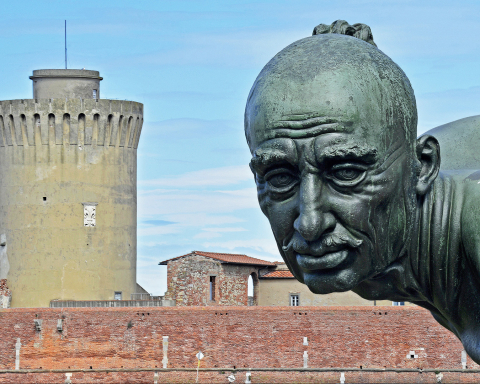
If it is true that environmental sustainability initiatives (like the development of cold ironing), the activities aimed at enhancing historical heritage (such as the projects to surround the Old Fortress and the Marzocco Tower with water once again) and the regeneration of the waterfront areas (with the Port Authority contributing (also financially) to relaunching the boating marina) are all part of a strategy ultimately aimed at producing social well-being through a sustainable governance of the Network ports, Port Centers – according to Gariglio – can and must serve as a strategic tool for spreading the added value of a community that, through its maritime identity, can find the necessary resources to build a new future.
This is precisely the direction of the Port Authority’s future projects which see setting up a network of Port Centers in the area as the fundamental lever for creating and spreading culture, bringing people closer to ports through the use of technology. With this in mind, a suitable location has been found for setting up a new Port Center in Piombino, in the Integrated Port Services Center near the Passenger terminal. Another one could be built in Portoferraio inside its ‘Magazzini del Sale’ building, currently undergoing redevelopment, also set to house the PNA’s Decentralized Administrative Office, inaugurated in April 2023.
All this project designing is based on a historical vision that has never stopped putting people first. The Mayor of Livorno, Luca Salvetti, is aware of this. In his speech, he extended his heartfelt thanks to the Port Authority for the work it has being doing over the last few years: “Livorno is not a city with a port, but a port city,” he ponted out ,highlighting how the innovative idea of the Port Center has managed to insert the port into a narrative dimension that has facilitated its integration into its urban fabric.
The Head of Tuscany Directorate’s Technical-Administrative Department, Commander Armando Ruffini, espressed a similar view. He pointed out how the planning of areas for port-city interaction purposes has been institutionalized with the port reform law. The Director of AIVP, Bruno Delsalle, spoke of the strategic role of the Port Centers: real test-beds for experimenting with virtuous forms of coexistence between cities and ports.
The celebratory initiative organized by the PNA and AIVP saw the participation of international experts and speakers. Under the moderation of the Italian port association’s communication manager Tiziana Murgia, they discussed their experiences of port – city integration, focusing on the smart enhancement of cultural-port heritage. Particular attention was given to Livorno’s “Blue Mile project”, developed by the PNA in 2024 aimed at networking and digitally promoting the cultural heritage of the Livorno port area.
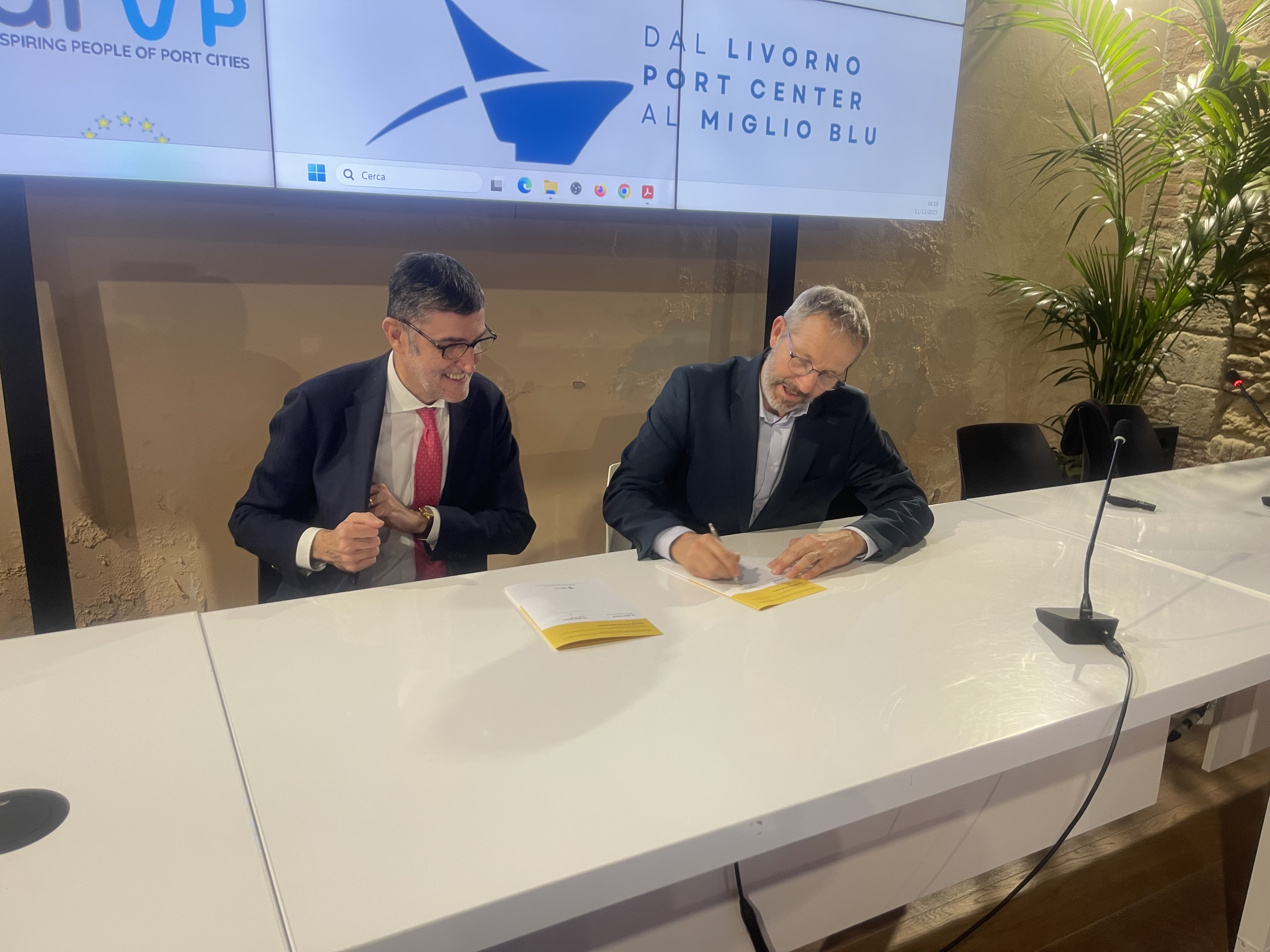
During the event, the president of the port administration, Davide Gariglio, and the Director of the AIVP, Bruno Delsalle, also signed the updated Port Center Charter which defines a framework of clear, common objectives, based on which each Port Center develops its own program of activities according to the history and socio-economic scenario of each port-city.
Translation by Giles Foster