
When we think of the sea, the most vivid images that come to mind are seaside holidaymakers, cruise ships, and fishing boats coming back into the port at sunset. The sea is much more than this; it is essentially a huge natural infrastructure that affects most of the world’s economy.
Just one statistic: over 90% of international trade is by ship.
This is why discussing maritime policy means addressing an issue that is intrinsically linked to transport, the economy, safety/security, energy and the environment.
To truly understand how this complex machine works, we usually use a simple, effective IT analogy.
Hardware and software are essential because, like computers, maritime policy needs both functional, physical infrastructure and operating systems capable of making it work at its best.
Two distinct but interlinked, interdependent components that cannot be separated, and without which no course can be charted.
Hardware
Hardware is what you see, what comes from real, substantial investments. It is the physical structure where the maritime system operates from.
Ports are our key hardware. They represent the backbone of logistics. Expansion projects, seabed dredging, railway and motorway links are not technical details, but vital conditions for rapid, competitive trade.
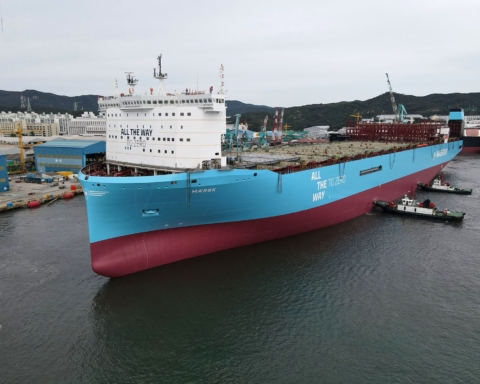
Ships represent the mobile infrastructure we transport goods and people on. The merchant fleet is constantly evolving. Nowadays it is safer, more technical and, above all, more eco-friendly.
Other examples of hardware include shipbuilding, one of our country’s most historic industries, that has to constantly evolve to keep pace with the times, offshore energy, with floating wind farms, gas and oil rigs, and hybrid systems for generating energy at sea; and safety & security, in other words Coast Guard vessels, high-tech surveillance systems, underwater drones, and digital technology for monitoring shipping routes.
Software
Clearly, no infrastructure, however up to date, can function independently. To be effective, it requires clear rules, coordination and trained personnel. This is the invisible but fundamental aspect, the software of maritime policy.
Streamlined port bureaucracy and standardized legislation on safety/security and sustainability are all associated with this. Digitalization is also a key factor in verifying the efficiency, effectiveness and cost-effectiveness of port activities for the purpose of optimizing supply chains (smart ports, digital customs processes, satellites to monitor flows and optimize routes).
Not to mention training. Without it, it wouldn’t be possible to develop new professional skills and take advantage of future employment opportunities.
Finally, European coordination activities (the ways in which the EU supports an integrated maritime policy) and, above all, environmental policies deserve special mention, because battling climate change also involves the sea. The decarbonization of transport and safeguarding marine ecology are not a choice, but an imperative.
Why hardware and software have to go together
To sum up, we could say that an ultra-modern port is of little use if ships are held up for days while a long, complex process takes place. Likewise, an ambitious decarbonization law is meaningless in a world where there are no ships or infrastructure to respect it.
Hardware without software is therefore inefficient. Software is ineffective without hardware that is capable of supporting its functionality. A practical example? Ecological transition and shipping. On the hardware front, new ships powered by hybrid, electric or hydrogen propulsion, and ports with charging and refueling systems, are essential. Software requires international standards to set emission reductions, to incentivize companies to invest, and international coordination to mitigate competitive imbalances.
When looking at the sea, a distinction between hardware and software helps us understand that the future should not consist solely of what is visible, but also of intelligible rules, proactive strategies and human capital.
This is how maritime policy becomes a driver of sustained growth and safety. Without these two components together, it will never flourish. In other words, to navigate the future of the sea, it is not enough to have a modern ship; you need the right course.
Ports, ships and technology on the one hand, regulations and innovation on the other. Only in conjunction with coordinated, rather than isolated, infrastructure will Italy be able to shape its maritime policy for the future.
Translation by Giles Foster