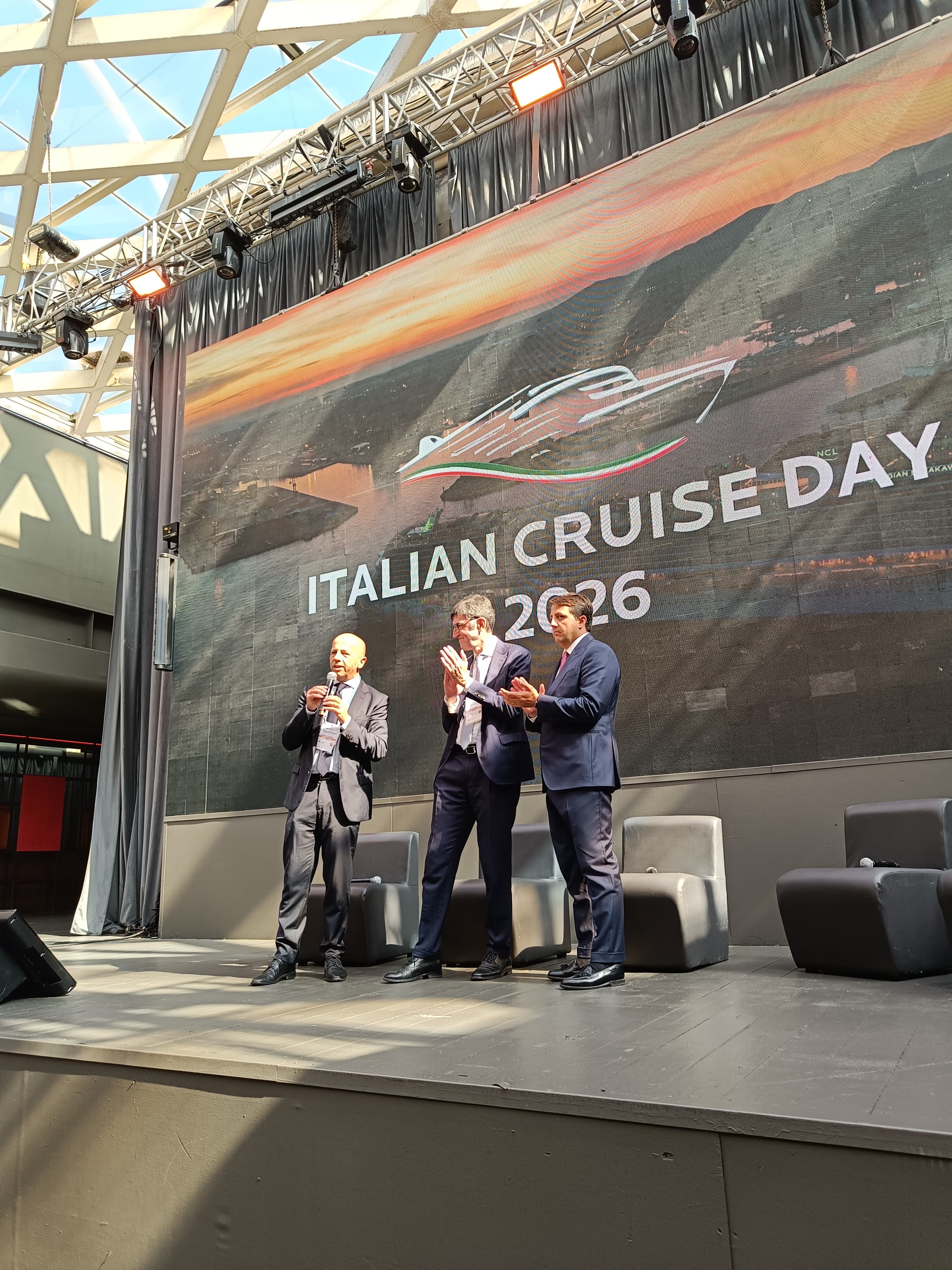
RisposteTurismo is putting its stakes on Livorno. The city is to host the thirteenth edition of Italian Cruise Day, the sector’s itinerant forum. It’s not the first time for Livorno. It hosted the third edition of the initiative in 2013.The choice made by the company, specializing in devising projects and operational solutions for organizations and businesses in the tourism sector going through strategic or management issues, is by no means a coincidence. The company’s president and founder, Francesco di Cesare, gives Port News an insight into the cruise market’s current and future scenarios; a sector which could become increasingly strategic not only for Livorno, but also for Piombino and Portoferraio.
Why did you choose Livorno for the next Italian Cruise Day edition? What is the reason behind this choice?
The Italian Cruise Day began as a project to be carried out together with key stakeholders – public and private entities – in the cruise industry in Italy, organizations that are either impacted by the sector or for whom it is their core business. From the outset, Risposte Turismo proposed the project to the various regional areas (ports, municipal administrations, operators) that had contributed to enriching and extending the map of Italian cruise destinations and who had continually expressed their interest. That’s our starting point when we make our choice. We perceived Livorno’s great enthusiasm and interest– with its Port Network Authority and its PortoLivorno2000 terminal operator – in hosting the 2026 edition of the forum. We are delighted that this city will be the first to have welcomed the event and all its participants twice.
Cruise industry forecasts for next year were recently presented in Catania,. The port of Livorno expects 820,000 passengers and 420 ship calls. There is talk of a possible 2.5% annual increase in the number of passengers and an 11.4% yearly increase in the number of berths. Why are berths growing faster than passenger numbers?
Statistics on passenger flows and the number of berths should always be considered as being connected, but they also have their own determining factors. The possible discrepancy in terms of passenger and vessel numbers depends mainly on the size of the ships. Today, cruises are becoming increasingly diversified, relying on a fleet of cruise ships that can now be defined as small (less than 1,000 beds), as well as medium, large and very large vessels (over 5,000 beds). Consequently, the possibility or choice of accommodating one type of vessel or another has a significant impact on results in terms of calls and passenger flows. As for Livorno, it has long been one of the top locations for Italian and Mediterranean cruises. Cruise lines always view calling at its port with great interest, both for the infrastructure and services it provides and for the opportunity to visit many destinations which can be easily reached from there. Livorno, thanks in part to the variety of berthing positions it offers, welcomes 40 different cruise companies: an excellent result in terms of customer portfolio.
If we take a close look at Risposte Turismo’s analysis, we find that 15.4 million passengers are set to be handled in Italian ports in 2026. Tuscany accounts for 5% of the national total (almost half of what it was in 2012). Some talk about Livorno’s lost competitiveness, even though it remains Tuscany’s main port. Is this true?
I wouldn’t talk about lost competitiveness, but rather about completely different scenarios, with new stakeholders joining both the port sector and the cruise world. In addition, dynamics have been changing year after year. This also conditions cruise company deployment and itinerary choices.
In November 2024, RisposteTurismo presented a research project focusing on identifying specific measures to be developed to retain up to 15% of incoming cruise passengers, doubling the numbers at that time. Do you still think this is feasible today?
Definitely. In my view, this is Livorno’s main challenge. It’s not an easy target. There are many port cities like Livorno that see ships arrive but often fail to retain passengers in terms of visits. However, if everyone works together, the current results can be improved. The question we have to understand is how much the entire destination wants to believe in it and how much it can become a strategic point in the near future. If there is a common belief which can be transformed into commitments, results can be achieved.
The port of Livorno enjoys an undoubtedly strategic position that could perhaps be exploited better. Among the critical issues raised is the lack of plans for direct rail transfers from Livorno to Tuscany’s art cities and Pisa Airport (fly-and-cruise packages are very important for customers). Do you agree with this brief analysis?
Let’s say that intermodality and, more generally, solutions designed to make a port or destination more accessible are key factors to facilitating greater performance and benefits in terms of traffic and the positive impacts it generates. In some cases, rail transfers are essential to overcome road accessibility issues, such as people embarking and disembarking travelling to and from port cities, although these scenarios are less critical for Livorno given its prevailing competitiveness as a transit port. Having said that, each location has to be analyzed individually, and any potential infrastructure has to be assessed in proportion to its potential impact in terms of use. However, the opportunity to consider future investments should certainly be welcomed.
In Tuscany, there is not only Livorno but also Piombino and Portoferrario. What are your traffic forecasts for these two ports?
We are currently finalizing forecasts and considerations for a series of ports with less traffic, so I would prefer to avoid answering the question at this time.
What is the relationship between Piombino and Portoferraio with Livorno, and what, in your opinion, are the main priorities that need to be addressed to make these two ports even more attractive?
These two ports are certainly not in competition with Livorno but rather complement it as part of a port network. Portoferraio is one of those so-called boutique ports, with a well-established position thanks in part to the companies that call there most frequently. However, there is also room for growth in generating satisfaction among cruise passengers by helping them to discover the whole island and its merits and treasures. Opening hours, for example, at certain museums, still need to be improved, as they fail to coincide with passenger schedules. Margins for traffic growth are significantly greater in Piombino, thanks in part to its excellent infrastructure and the potential of the new shore-based electrification project. Granting at least a medium-term concession to a specialized stakeholder that can promote the port and manage cruise traffic will certainly contribute to this potential growth.
Translation by Giles Foster