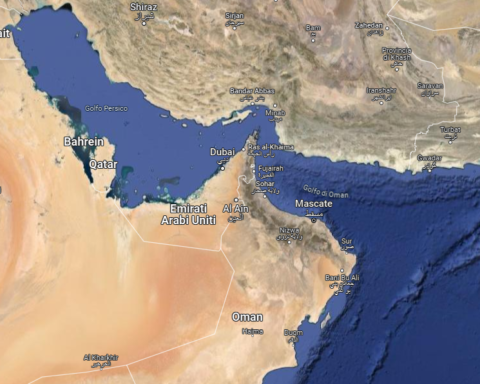

The situation in Hormuz represents more than just an energy crisis; it is a further sign of the gradual decline of international law.
Maurizio Maresca is fully convinced of this: “The undermining of the rules that have, for at least seventy years, guaranteed a so-called social market economy based on supervised and regulated economic freedom is now the major issue that states must address in order to promote, through national measures, the competitiveness of their businesses”.
According to the professor of European Union Law & International Law at the University of Udine, it is very difficult to predict how the new world order will take shape following this crisis, which, to top it all, involves the major international organizations (the UN, the WTO, the WHO, etc.): “The United States and Russia,” he admits, “now seem to have definitively abandoned the idea of a West that includes both sides of the Atlantic, and are instead considering an alliance with Beijing, perhaps extended to the Arab countries, Turkey and India”
In addition to the global economic order, the rule of law – which has always defined the relationship between society and politics – is also under threat. “The end of the 20th-century world order,” Maresca continues, “is accompanied by a profound transformation in the nature of the international community as it was envisaged after the Westphalia Peace treaties.” The truth is that “the role of the law, which for many years has defined the international order, and more recently fundamental rights and economic freedom – a legacy and contribution of Europe from the 17th century onwards – now appears to be in visible decline in the name of a resurgent sovereignty that imposes a top-down approach and doesn’t tolerate mediation”.
Mr. Maresca goes on to point out that the current economic climate is clearly having a significant impact on global trade as well. On the one hand, there is the crisis in international trade law and the WTO in general, as well as tensions surrounding tariffs and the rise of protectionism, which “are making international trade highly uncertain, particularly between the Far East and Europe”. On the other hand, there is “this neo-imperialism which now focuses on the development of new, vast territories that represent the future of the planet (Africa, the Far North and the Far East) which threatens the balance of territorial influence and the chokepoints themselves”, starting with the Suez Canal and the Strait of Hormuz, “which based their very existence on respect for the principles of economic freedom and freedom of navigation that underpinned the General Agreement on Tariffs and Trade (GATT), the IMF, the WTO and the 1983 Convention on the Law of the Sea”.
“It is clear,” adds Maresca, “that calling into question the strategic importance of the Strait of Hormuz and the Red Sea, as is currently happening, has a significant impact on the Mediterranean, which has long been going through an identity crisis that is calling into question its ability to serve the European continent directly, thereby favouring the ports (both old and new) of Northern Europe, all of which are served by the Arctic Ocean and, in any case, by the African corridor.”
According to the legal expert, today there is a risk of reinforcing “a one-way flow from the various northern ports towards the wealthy regions of Bavaria, Baden-Württemberg and the Po Valley”, much to the expense of Mediterranean ports.
Unfortunately, there is no clear evidence to enable us to address the issues of world order, spheres of influence and trade routes with any certainty: “Opinions tend to be divided between those who seek to uphold the international law as we know it – and thus to invoke fundamental rights or the principles of the UN Convention on the Law of the Sea, which we see becoming less and less effective – And there are those who wonder what principles a new minimum standard for coexistence might be based on” and especially which states will play a leading role in this development” the university lecturer from Udine points out to Port News: “There is no doubt,” he adds, “that the United States, Russia and China, together with India, the Arab countries and Turkey, probably represent the fulcrum of the new international economic order: one that will also involve a division of spheres of influence and, consequently, the selection of trade routes.”
According to the distinguished lawyer, we have to look at these countries in order to understand whether the various Arctic Routes – so problematic for safety and climate protection reasons, yet so strategic due to the significant reduction in transit time between Asia and Europe – represent a viable solution for connecting the Old Continent and the Far East, and to understand whether the Suez Canal and the Strait of Hormuz can still play a central role even in a scenario that has certainly changed considerably.
It will be up to these countries “to establish certain minimum rules regarding Africa’s development, viewing the continent from both the eastern and western shores of the Middle East and the Far East.” In short, the feeling is “that it will be the three major powers (Washington, Moscow and Beijing), together with their allies, who will lead an international initiative – perhaps an asymmetrical one – even in the face of significant differences regarding economic governance, in order to ensure certain basic rules”.
What is certain today is that “the days are gone when we questioned the role of multinationals and their international legal standing, or the scope of international law with regards to non-state actors, perhaps reaching the conclusion, in the second half of the 20th century, that the international community had evolved to include private individuals among its actors (but only within the limited scope of human rights)”, observes the legal expert. The way he sees it is that any conceptual distinction between the public sector representing national interests and the private sector investing now appears anachronistic.
“Much of the international economy,” he observes, “is driven by global companies, sometimes acting on behalf of states and sometimes as a product of the market, but certainly not coordinated by either the international community or its key players. If we fail to acknowledge this, states will continue to make decisions based on theory, without the slightest consideration for what the reality is, building infrastructure or public enterprises that serve no purpose and which risk being doomed to failure or marginalisation.”
The university lecturer points to Trieste’s Molo VIII pier as an example. He questions whether this project is really necessary at a time when Mediterranean trade is in decline, particularly given that a railway infrastructure has been completed just a few kilometres away, which is revitalising the port of Koper (which is already the leading port in the northern Adriatic). Another example mentioned by the lawyer is Livorno’s Darsena Europa which is to be located in a region where, just a few kilometres further north, all the shipping companies are directly involved in the management of no fewer than five competing terminals. Looking specifically at Liguria, Maresca wonders whether it makes sense to have a system comprising six relatively small container terminals (excluding Voltri) without any real coordination to enable the supply of goods to areas beyond the Po Valley at reasonable costs. This is the path which, according to the well-known lawyer, the Port of Genoa is currently pursuing: it aims to redefine its alliance with the main shipping companies without necessarily focusing on the construction of new infrastructure.
It is clear that national industrial or transport policy decisions to be implemented in collaboration with the world’s leading transport operators raise a number of issues at European level, particularly from the competition law perspective. Mr. Maresca points out, however, that “EU law already provides the tools for Member States and the Union to collaborate with the private sector in the pursuit of the general interest (as in the aerospace or energy sectors, for instance)”.
In short, today’s international community demands that we recognise the pivotal role played by collaboration between the public and private sectors and the scientific research community in fostering competitive enterprises governed by both international and national regulations. To put it more plainly, “the objectives of the United States, China and Russia, as well as those of various Arab countries and Turkey, are clearly discernible thanks to the alliances these states forge with the major market forces.” This is particularly evident if we look at the shipping industry, where the major global companies – whether Chinese or European – all driven by a focus on market growth and return on capital, collaborate with various national governments (see the Panama affair, Hutchinson’s reorganisation of terminals in the Far East, the expansion of terminals on the west coast of Africa, etc.)”.
The university lecturer offers a final reflection on Europe, which – he admits – is failing to play a decisive role in the current economic climate at the moment. ““EU countries are failing to develop any sort of freight transport policy capable of defining truly federal European corridors, rather than ones divided among Member States on the basis of mere political expediency” says Maresca. He believes that European countries are currently reviving subordinate industrial policy choices, limiting themselves, if anything, to putting up market access barriers to prevent non-European firms from competing. “The hope,” he emphasises, “is that Europe will manage to emerge from this marginalised position and develop a capacity for international and industrial policy that it simply lacks today.”
In the renowned lawyer’s view, the only way out is the idea that the major shipping companies – all of which are European (MSC, CMA CGM, Maersk and Hapag-Lloyd), are capable of playing a constructive role, in agreement with the member states, which leads to a policy that allows Europe to sit at the table with the major players (albeit playing a much smaller role than it did seventy years ago).
This collaboration between the European maritime industry and Member States would aim to “work towards a single European mobility policy, without undermining the role that these groups inevitably play on the international stage.”

Translation by Giles Foster