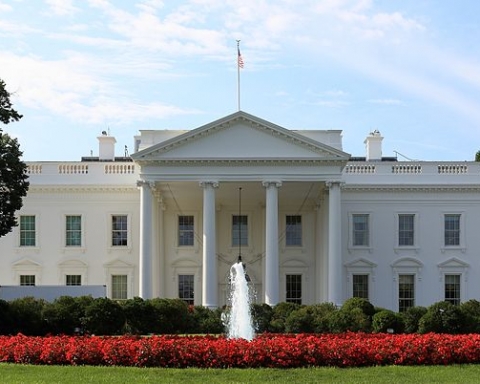

A diplomatic meeting of global significance, but nothing more. Apart from the announcement that China is to purchase 200 Boeing aircraft, Trump’s visit to Beijing didn’t produce any real results.
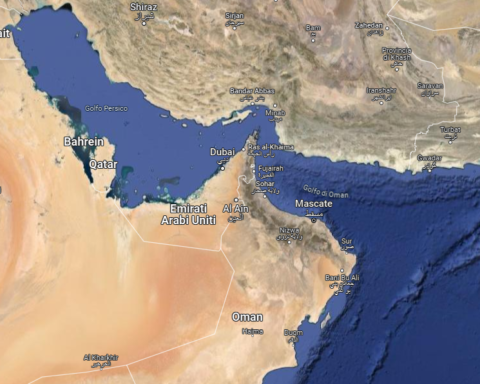
No tangible progress, for instance, on the Strait of Hormuz, despite both powers agreeing on the need to avoid militarization or tolls. This opposition on principle has served, if nothing else, to redefine the contours of a long-term strategic balance and to enhance – in Xi Jinping’s words – “mutual understanding and trust”.
This framework of formal stability currently allows Iran to continue to operate with a variable geometry strategy. Proof of this is the fact that the government in Tehran has given the green light for Chinese ships to cross the strait, agreeing to a formal request from Beijing in the name of their strong strategic partnership (China purchases around 90% of Iran’s crude oil exports).
The Iranian Foreign Minister, Seyed Abbas Araqchi, insisted that the Strait is open to everyone except countries formally at war with Iran (namely the United States and Israel), and that Tehran is prepared to guarantee safe passage to anyone, using the assistance already provided to certain Indian ships as an example. The fact, however, that the transit system developed by the Ministry of National Economy, known as Hormuz Safe, will be managed through the issuance of a digital insurance policy paid for in Bitcoins, is still indisputable. Shipping companies wanting to cross the Strait have to submit a formal request to the Persian Gulf Strait Authority and pay the fee. This is a monetisation scheme which, according to the Fars news agency, could generate over $10 billion in revenue for Tehran.
The effect this creates is an inherent ambiguity, which today’s traffic data clearly highlights.
Lloyd’s List Intelligence’s tracking data clearly shows that the number of actual passages through the Strait of Hormuz has plummeted: whilst there were just over 80 traceable crossings in mid-April (we are talking about vessels over 10,000 tonnes), the figure fell below 40 in the first few weeks of May.
According to Linerlytica’s data, only 17 boxships not linked to Tehran (equivalent to 127,000 TEUs) have managed to cross the Strait of Hormuz since the conflict began. In the Persian Gulf, there is an almost complete standstill: 79 vessels (over 312,000 TEU) remain stranded and inactive, whilst another 28 have been redeployed as feeder vessels for domestic routes only. The price to pay for anyone attempting to breach the Iranian blockade is extremely high. Three vessels have already been attacked: the most recent incident occurred on May 5th, when the CMA CGM San Antonio was hit by a missile. Meanwhile, the US counter-blockade has paralysed the Iranian fleet, forcing 10 containerships to remain at anchor in the Gulf and a further three outside it, including the Touska, which has been detained in Karachi since it was seized on 19th April by the US .
“As the situation is currently developing it is clear that de-facto Iran remains in control of the commercial usage of the Strait of Hormuz with the exception being its own usage subject to the US blockade. And whilst partially successful, a few vessels can still be seen servicing Iranian ports.” writes Lars Jensen, CEO of Vespucci Maritime, in a post, describing the current situation as a conflict that calls for a multi-tiered system: You can transit only if there are specific bilateral agreements (as in the case of Chinese ships or certain tankers bound for India), whilst traditional commercial operators linked to the West have completely disappeared from the radar.
What is clear is that global trade routes continue to be determined by the rigid constraints of geopolitics.
Today, eleven weeks after the outbreak of hostilities, the disruption to the supply chain is even worse than it was in the early days of the crisis. Middle Eastern ports that until yesterday were crucial hubs — such as Jebel Ali in Dubai, the world’s ninth-busiest container port — are literally being ignored. Ships tend to call at Colombo in Sri Lanka, or at Mundra and Nhava Sheva in India, ports that usually rank much lower in global rankings.
In one of its articles, Market Watch points out how the deadlock in the Strait of Hormuz has prompted an increasing number of smaller oil tankers to use the Panama Canal. Referring to data published by the maritime data analytics firm Kpler, the publication noted that weekly transits rose from 52 in the week of 23rd February to 76 in the week of 4th May.
Meanwhile, congestion in Panama continues to worsen on the eve of the maintenance work scheduled by the Panama Canal Authority from 9th to 17th June at the Gatún Locks (eastbound lane).
During this maintenance work, the number of daily transit slots will be reduced to 16 and vessels will be diverted to the west lane only, which will inevitably result in longer sailing times.
This reduction in capacity is causing concern in global markets, which are already under severe strain due to the chokepoints caused by trade flows being diverted away from the Strait of Hormuz.
The Scandinavian investment bank SEB has warned of rapidly increasing risks, pointing out that average waiting times in Panama have already reached 47.9 hours, 60% longer than the average for January and February.
In short, while the Strait of Hormuz crisis has once again highlighted how geopolitics is a determining factor in global maritime trade, the saturation of other chokepoints could leave operators with no viable routes, forcing them to bear the costs of a fragmented trading system.
Translation by Giles Foster